How to Pick a Wedding Ring Metal That Works for Everyday Wear
Choosing a wedding ring metal for daily wear is a decision that blends personal taste with practical concerns. You want a ring that looks good, feels comfortable, and holds up to years of contact with surfaces, soap, and a changing environment. The metal you choose affects the ring's weight, how it feels on your finger, and how often it needs maintenance. For many couples, the appeal of platinum wedding ring sets lies in their reputation for durability and a naturally white finish that does not require regular coating. But platinum is not the only option, and the right choice depends on how you live and what you value in a ring.
This article walks through the factors that matter most when selecting a wedding ring metal for everyday wear. It covers the common metals, their strengths and weaknesses, and what to watch out for with each one. The goal is to give you a clear sense of how to match a metal to your lifestyle so you can make a confident decision.
Understand How Metals Behave Under Daily Stress
Every metal has a hardness rating, often measured on the Mohs scale, and a level of malleability that affects how it scratches, dents, or wears down. Hardness alone does not tell the full story. A very hard metal can be brittle, while a softer metal may bend under pressure without breaking. For a ring that you plan to wear constantly, you want a metal that resists scratches but also bends slightly instead of cracking if it gets caught on something.
Platinum is dense and heavy. It scratches more easily than some harder metals, but it does not lose material when it scratches. The displaced metal simply moves to the side, so the ring's weight stays constant. Over time, platinum develops a soft patina that many people like. If you prefer a high-polish shine, you will need to have it polished periodically. White gold is harder than platinum in its alloyed state, but it gets its white color from a thin layer of rhodium plating. That plating wears off over time, and the ring needs to be re-plated to stay bright. Yellow gold and rose gold are softer alloys that scratch and bend more readily, but they do not require plating and can be polished back to their original color. Understanding this trade-off between maintenance and appearance is the first step.
Consider Your Skin and Any Allergies
Some metals contain nickel, which can cause allergic reactions in people with sensitive skin. White gold often contains nickel as a hardening agent. If you have known nickel sensitivity, white gold may cause a rash or discoloration on your finger. Platinum is hypoallergenic and rarely causes a reaction, which makes it a safe choice for sensitive skin. Pure gold in its 24-karat form is also hypoallergenic, but it is too soft for daily wear. Most gold wedding rings are made from 14-karat or 18-karat alloys, and those alloys can include nickel. Rose gold contains copper, which is generally well-tolerated but can cause a greenish tint on the skin for some people. That tint washes off and does not indicate a health concern, but it is worth noting if you dislike the idea.
If you or your partner has metal allergies, ask a jeweler about the exact alloy composition before buying. Some manufacturers offer nickel-free white gold alloys that use palladium instead of nickel. These are less common but available. Platinum is a straightforward choice if you want to avoid allergic reactions entirely.

Match the Metal to Your Lifestyle
Think about what your hands do during a typical day. Do you work with tools, weights, or machinery? Do you type on a keyboard for hours? Do you cook, garden, or play sports? Each activity puts different stress on a ring. For someone who works with their hands a lot, a softer metal like gold can bend out of round over time, especially if the ring has a thin band. Platinum is denser and holds its shape better under impact, though it will show scratches. Some people prefer the character that comes with a worn-in ring, while others want a ring that stays looking new. If you are in the latter camp, you might choose a harder metal like a cobalt chrome or titanium, but those are difficult to resize and cannot be worked by a typical jeweler. They are also not traditional wedding ring metals, so consider whether that matters to you.
For people who remove their rings often, such as nurses or chefs who need to wash their hands frequently, the risk of losing the ring is real. A metal that is easy to resize, like gold or platinum, gives you the option to adjust the fit if your finger size changes. Titanium and tungsten are difficult or impossible to resize, so if your size changes, you may need to buy a new ring. Platinum wedding ring sets often include matching bands that are designed to be worn together, which can complicate resizing if the bands are joined. Ask about that before you buy.
Weigh the Look Against Long-Term Appearance
The initial color of a metal does not always stay the same. White gold starts bright white because of rhodium plating. As the plating wears away, the underlying gold alloy shows a slightly warm, yellowish tint. This is not a defect; it is normal. You will need to have the ring re-plated every year or two depending on wear. Platinum stays white because it is white all the way through. It will dull slightly with wear but remains consistent in color. Yellow gold and rose gold do not change color over time. They can develop a warm patina that some people find appealing. If you prefer a bright white ring that requires minimal upkeep, platinum is the better option. If you like the idea of a ring that develops a worn-in look and does not need periodic treatments, a yellow or rose gold ring may suit you better.
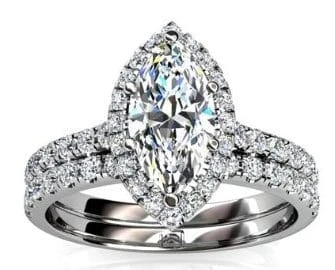
Another factor is how the metal interacts with the diamonds or gemstones in the ring. Platinum is strong enough to hold stones securely without much risk of bending the prongs. Gold is softer, so prongs may need to be checked and reinforced more often. For a ring with multiple stones, such as a bridal set, the metal's hardness matters for keeping the stones in place. Durable matching wedding rings crafted from a hard metal like platinum can provide extra security for the stones, especially if you plan to wear the ring every day without taking it off for activities.
Think About the Weight and Feel on Your Finger
Platinum is about 60% heavier than 14-karat gold. Some people love the substantial feel of a heavy ring. Others find it uncomfortable, especially if they are not used to wearing jewelry. Gold rings feel lighter and may be more comfortable for someone who is new to wearing a ring. Rose gold has a similar weight to yellow gold, so the weight difference is mainly between platinum and gold alloys. If you are considering platinum wedding ring sets, try on a platinum band in person if possible. The weight is immediately noticeable, and you will know within a few seconds whether you like it.
For people who wear their ring on the same finger as another band, such as an engagement ring and a wedding band, the combined weight matters. Two platinum bands can feel quite heavy together. Some people prefer to mix metals, wearing a platinum engagement ring with a gold wedding band, to reduce weight while keeping the look they want. This is a personal choice, and there is no wrong answer as long as the rings fit comfortably and do not rub against each other in a way that causes wear.
Decide on Maintenance That Fits Your Schedule
Every metal requires some care. The question is how much time and money you want to spend. Gold rings need periodic polishing to remove scratches and restore shine. White gold rings need re-plating. Platinum rings need polishing to remove scratches, but they do not need plating. The cost of maintenance varies. Polishing a platinum ring removes a tiny amount of metal, so over many years the ring can become thinner. Some jewelers recommend polishing platinum no more than once a year to avoid excessive metal loss. Gold can be polished more frequently without losing significant material because it is softer and the polishing removes less metal per session.
If you prefer a low-maintenance option, consider a brushed or satin finish on a platinum ring. The brushed texture hides scratches better than a high-polish finish, and you can go longer between polishes. Some people choose a matte finish for the same reason. These finishes are available on most metals, but they show differently depending on the metal's natural color. A matte yellow gold ring may look very different from a matte platinum ring, so see samples before deciding.
Plan for the Future: Resizing and Repairs
Finger sizes change over time due to weight changes, pregnancy, or aging. A ring that fits perfectly today may be too tight or too loose in a few years. Gold and platinum are easy to resize because they are ductile. A jeweler can cut the band, add or remove a small piece of metal, and solder it back together. The ring will look as it did before, though the resizing may leave a slight mark on the inside of the band that only you would see. Some metals, such as titanium, tungsten, and ceramic, cannot be resized by most jewelers. If you choose one of those, you need to be confident that your finger size will stay the same, or you need to accept that you may buy a replacement ring later.
For intricate ring designs, such as those with pave-set diamonds or a carved pattern, resizing can be more complex. The jeweler may need to remove and reset stones, which adds to the cost. A simple band is easier to resize than a ring with many small stones. When you are shopping, ask the jeweler about future resizing options for the specific ring you are considering. Some platinum wedding ring sets have multiple bands that are soldered together. Resizing a soldered set is possible but requires more work, and the bands may need to be separated and re-soldered. Keep that in mind if you think you might need a size change down the road.
Consider the Overall Cost Over Time
The initial purchase price is only part of the equation. Platinum costs more per gram than gold, and a platinum ring is heavier, so the upfront cost is higher. But platinum does not need rhodium plating, so you save that recurring expense. Gold rings cost less initially but may need more frequent polishing and, for white gold, regular plating. Over ten or twenty years, the total cost of ownership can be similar. Rose gold and yellow gold require the least ongoing expense because they do not need plating and can be polished less often if you accept a patina. Durable matching wedding rings made from a hard metal like platinum may also need less frequent prong tightening for stones, which can save on repair costs over time. When comparing prices, ask what services are included. Some jewelers offer free cleaning and polishing for life, which changes the calculation.
Ultimately, the best metal for everyday wear is the one that fits your finger, your style, and your tolerance for maintenance. Try on different metals, pay attention to how they feel after a few minutes, and think about how your daily routine will interact with the ring. A well-chosen ring will last for decades and can be passed down, so it is worth taking the time to get the metal right.